The Samuel Neaman Institute has published a new report reviewing the status of the academic boycott of Israel during the first half of 2026. The report presents an integrated analysis of current trends of anti-Israel and antisemitism on campuses worldwide, alongside key performance indicators of Israeli academia.
June 2026 – The Samuel Neaman Institute has published a new report reviewing the status of the academic boycott of Israel during the first half of 2026. The report presents an integrated analysis of current trends of anti-Israel and antisemitism on campuses worldwide, alongside key performance indicators of Israeli academia.
The report is based on the systematic collection and analysis of data, media reports, international reports, and academic indicators. It seeks to examine not only the scope of anti-Israel activity in the international arena, but also its potential implications for the standing and performance of Israeli academia.
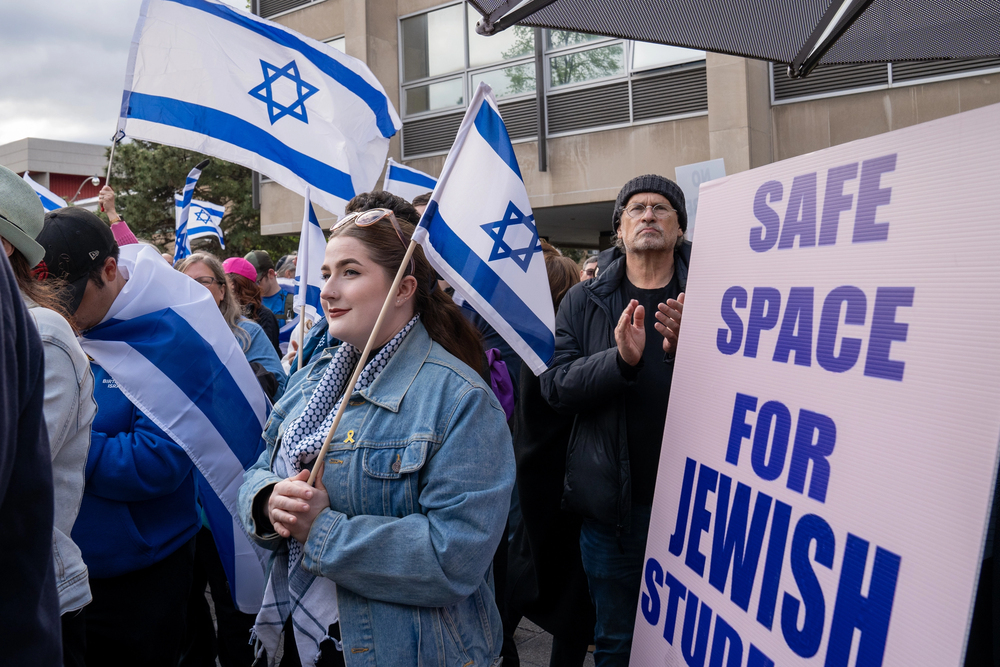
The findings indicate that following the peak of pro-Palestinian protests on U.S. campuses during 2024, the overall volume of demonstrations has gradually declined. At the same time, a broader trend continues: a worsening climate for Jewish and Israeli students and researchers. The report points to a significant rise in reported antisemitic incidents since October 2023, alongside processes of normalization of antisemitic attitudes, social exclusion, and political pressures within academic institutions in various Western countries.
A review of international reports from the United States, Canada, the United Kingdom, and Sweden suggests that, in some cases, protests and boycott initiatives are no longer limited to isolated student activity. Rather, they are increasingly reflected in institutional discourse and in initiatives led by faculty organizations and professional unions.
Prof. Boaz Golany, who leads the Samuel Neaman Institute’s research activity on the academic boycott, said:
“Public discussion of the academic boycott is often based on isolated events or personal testimonies. However, to better understand the depth of the phenomenon and its real implications, systematic, data-based monitoring over time is required. More than 700 media reports from around the world, examined as part of this research, make it possible to identify a shift from localized protests to broader trends of institutionalization of the boycott and anti-Israel discourse in academia. Our goal is to assess not only the intensity of the pressures placed on Israeli academia, but also its level of resilience and its ability to continue operating, collaborating, and leading research in the international arena. In the future, we plan to take a more proactive approach that will lead to thwarting academic bocott initiatives through collaboration with various NGOs and organizations that are active in this field.”
Beyond the personal testimonies collected by various organizations, the report emphasizes the importance of examining complementary system-level indicators that can help identify long-term effects on Israeli academia. Alongside the worsening trends, the report highlights that the main performance indicators of Israeli academia currently point to relative resilience. Data on research grants, scientific publications, and the rate of international collaborations do not indicate a dramatic decline in Israel’s research activity compared with peer countries.
The Samuel Neaman Institute research team notes that the effects of the war itself must also be taken into account, including military reserve service, disruptions to research activity, and logistical difficulties, all of which have affected researchers and the academic system as a whole. At the same time, the report identifies certain gaps in the pace of growth and in the scope of international collaborations, which may point to indirect and ongoing effects of external pressures.
The report further finds that alongside boycott initiatives and growing pressures, pro-Israel support initiatives and academic collaborations are also developing internationally. These include researcher networks, dedicated academic programs, and activities aimed at strengthening ties with Israeli institutions.
The Samuel Neaman Institute emphasizes that the phenomenon is complex and dynamic. Continuous, data-based monitoring of developments is therefore required, together with the formulation of proactive policy measures that can help preserve the international standing and resilience of Israeli academia during a period of growing geopolitical uncertainty.
Full report:
For interview coordination with Prof. Boaz Golany: [email protected]
The data collected as part of the Scholar Shield project is available in an interactive dashboard on the Samuel Neaman Institute website:
https://neaman-108d077757-c3h7b0fye6cgg3fg.a02.azurefd.net/project/scholar-shield/
###
About the Samuel Neaman Institute
The Samuel Neaman Institute is a national public policy research think tank focused on harnessing higher education, science, engineering and technology for the prosperity and resilience of society and state.